The John C Taylor Collection
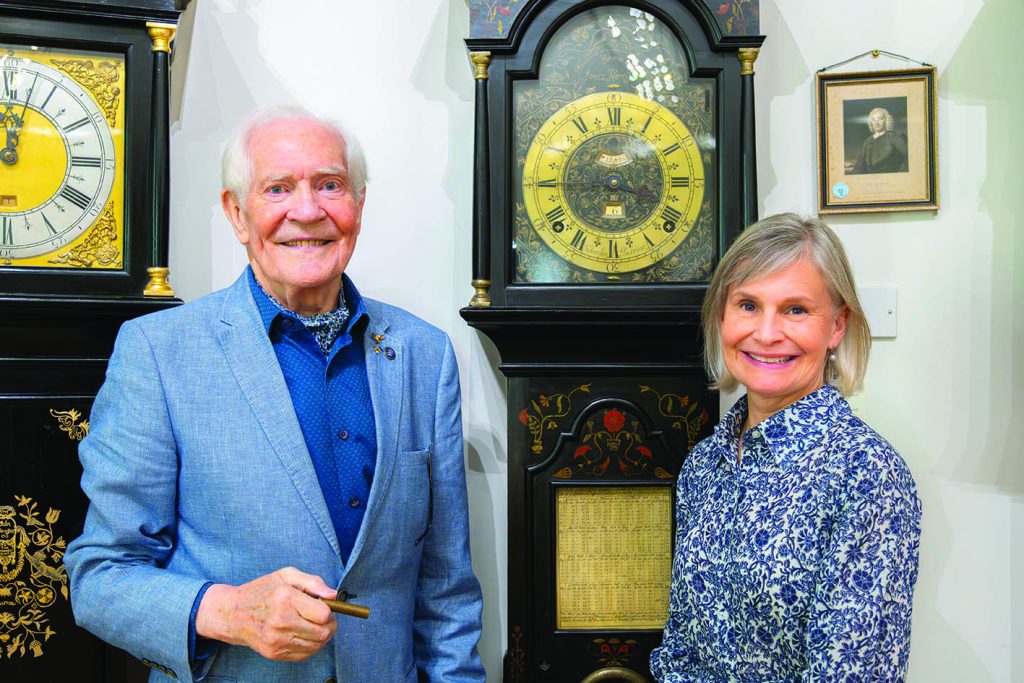
A select group of horologists had the chance to join Dr John C Taylor OBE at his Isle of Man home to view his important and unique collection of clocks and watches, many of which date from the ‘golden age of clockmaking.’
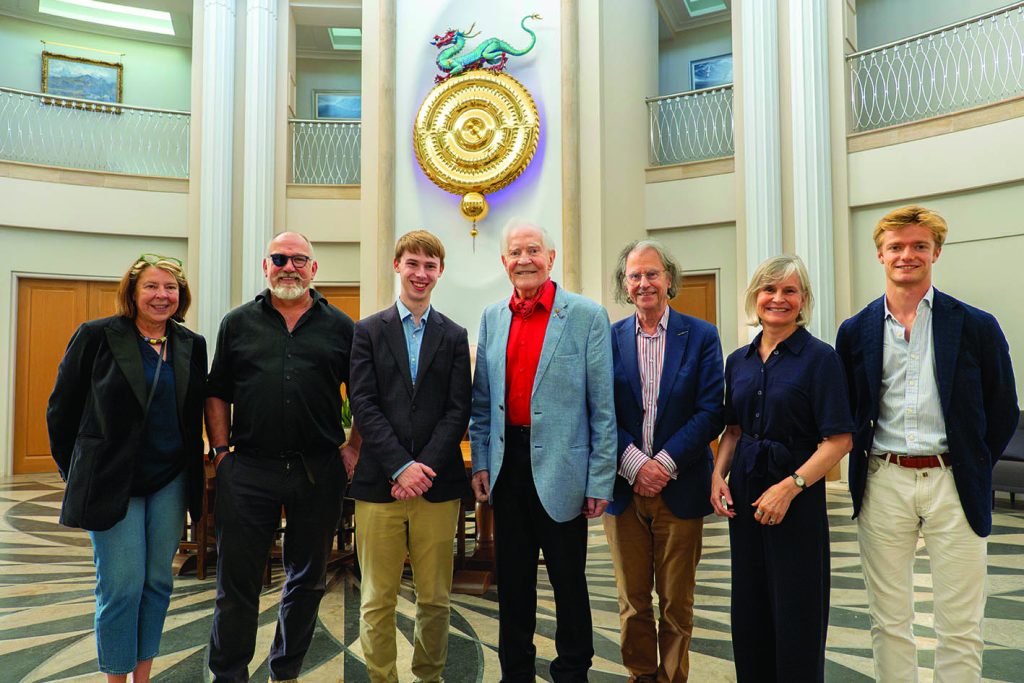
John’s home, Arragon Mooar, includes a purpose-built clock and watch room to house his significant collection. He was delighted to welcome Lynn and Keith Scobie-Youngs, Lewis Walduck, Andrew King and Edmond Bruce for a personal tour.
In the last few years, John has created The Clocktime Digital Museum – which provides photographs and explanatory videos of his collection.This appeals to a broad audience, from enthusiasts through to those studying clock and watchmaking.
It is not often that visitors are able to view the timepieces in person – so it was a great honour for the invited few.
BWCMG Director, Lewis Walduck, a clock specialist at Bonhams, said: ‘It was a privilege to be at the John C Taylor Collection surrounded by some of the finest clocks in the world.’
It has been a busy summer for Dr John C Taylor OBE, who invited a select group of friends to his home at Arragon Mooar on the Isle of Man, recently. As many previous visitors know, it includes a purpose-built clock and watch room to house his collection of antique timekeepers.
Taking pride of place in the atrium of Arragon Mooar is the Dragon Chronophage clock, one of four made by the inventor. This is a sister to the Corpus Chronophage in Cambridge, which has become the city’s most popular tourist attraction. John donated the gold-plated masterpiece to his former college, Corpus Christi. The clock features a mythical creature and a huge grasshopper escapement as a homage to his horological hero, John Harrison.
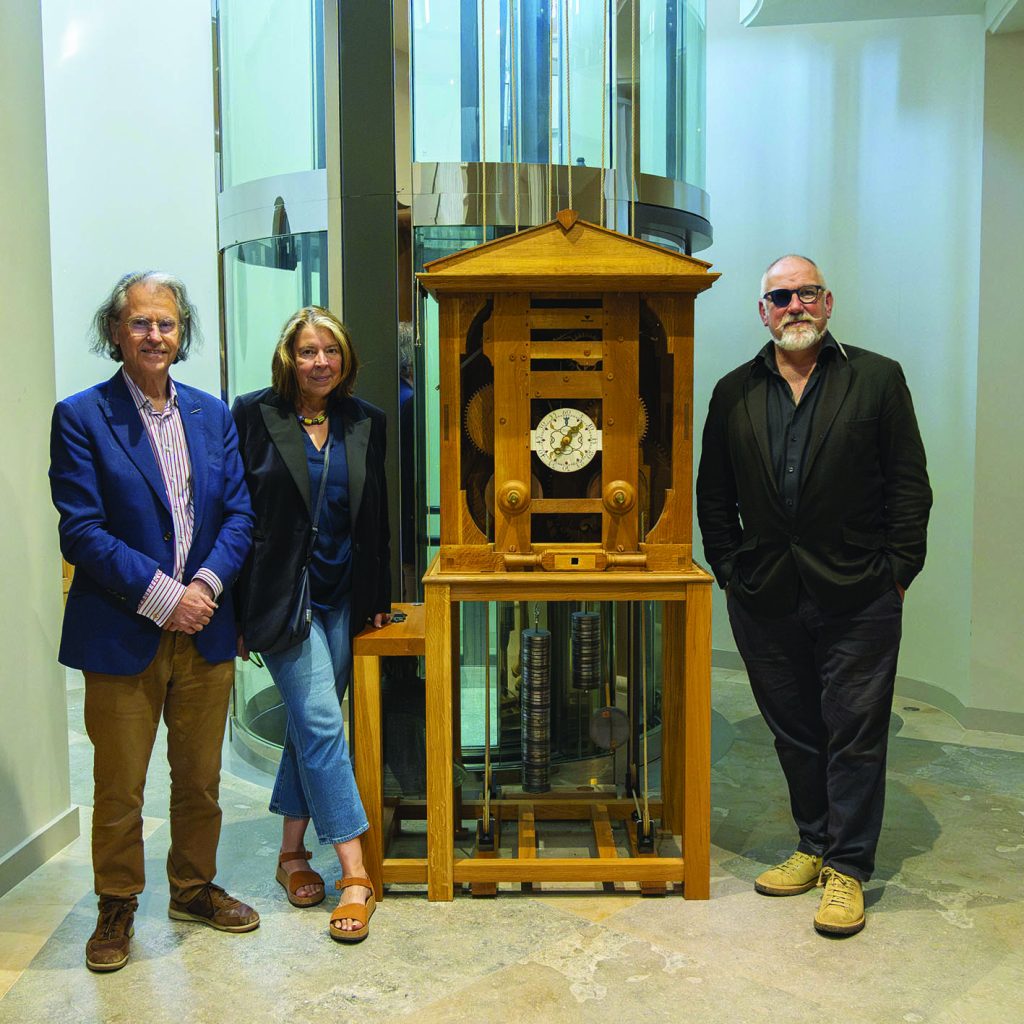
The six strong group, which included John’s daughter Dr Laura N Young MBE, admired the full replica of the Brocklesby Park turret clock, created by clockmaker Andrew King, using oak felled from the estate in which the original, made around 1722, is situated.
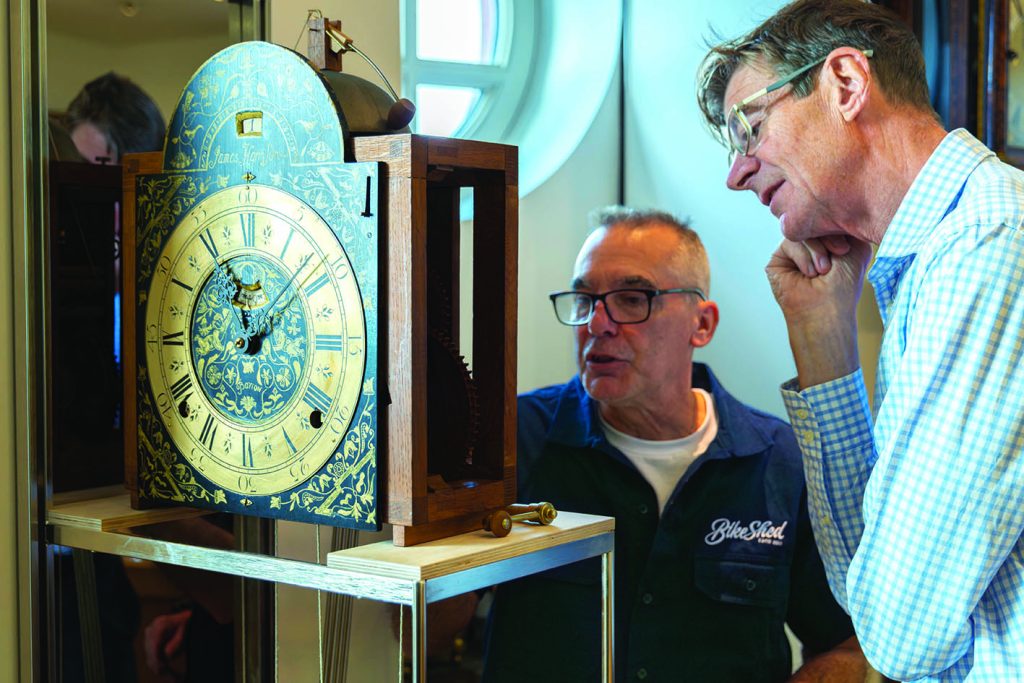
Andrew, who is an expert in all things ‘Longitude’ Harrison – also created the replica Harrison Regulator, which John displayed alongside his original of the same, dated 1726. Visitors admired these timekeepers with their mesmerising grasshopper escapements.
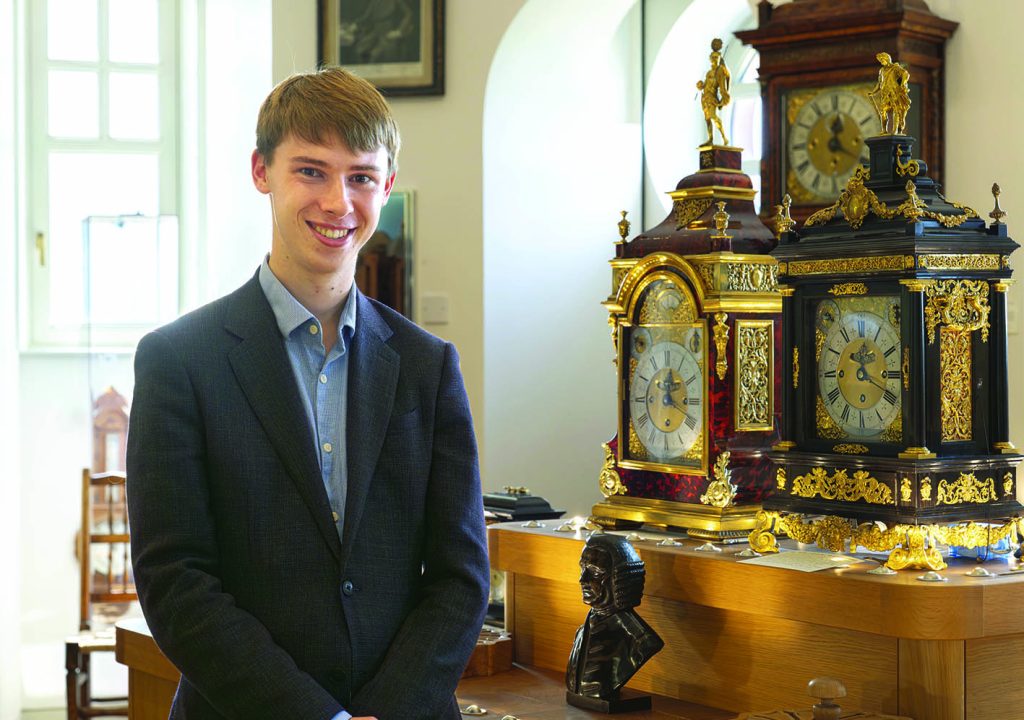
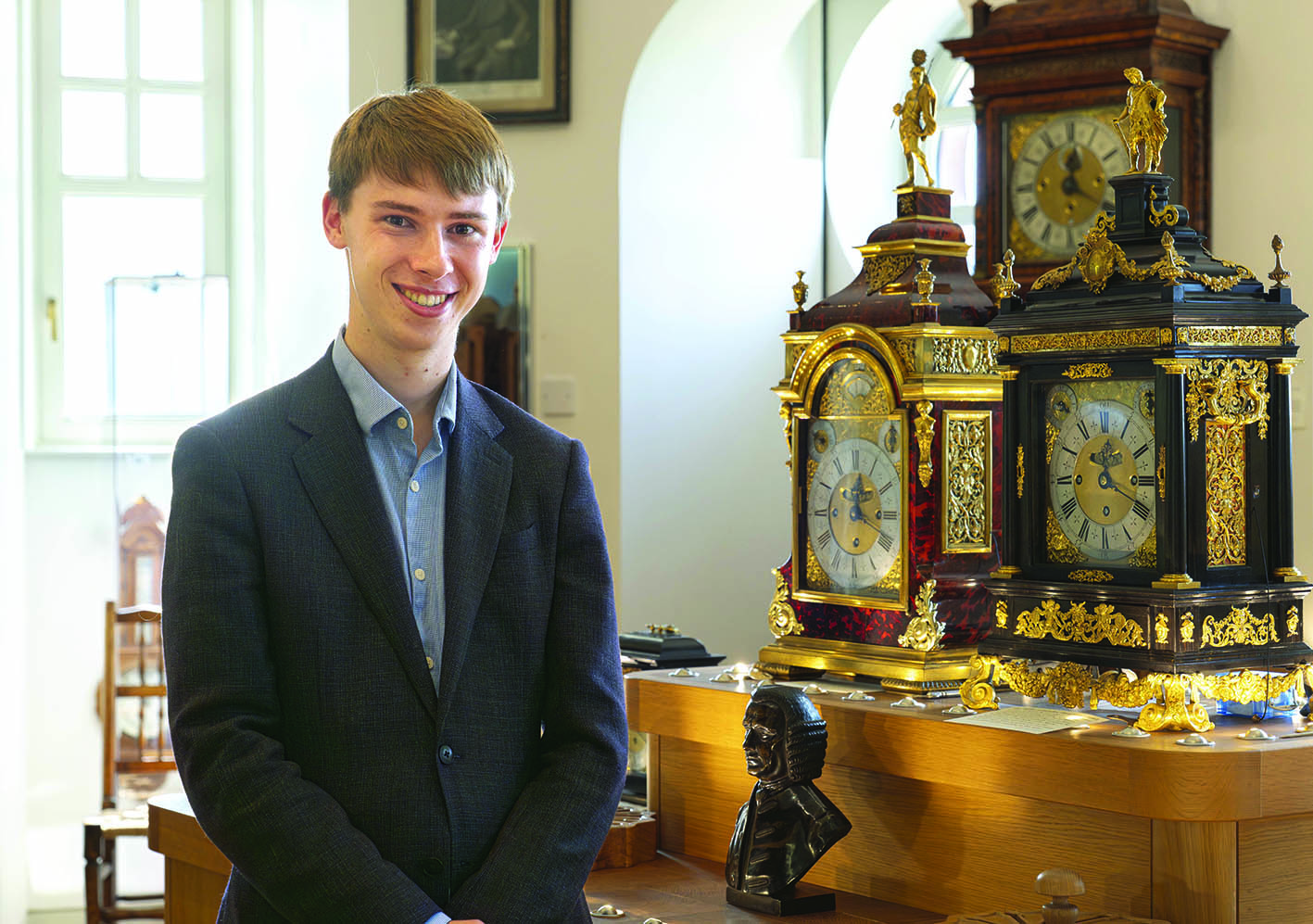
John C Taylor said: ‘King William III may have commissioned the Selby Lowndes Tompion when he fought the Battle of the Boyne on 1st July 1690, when Catholic King James II fled the field, leaving victory to the Protestants. The gilt brass finial of a Roman general may be an allegory for Victory. The case was probably designed for Tompion by Daniel Marot, King Louis XIV’s Huguenot court designer.
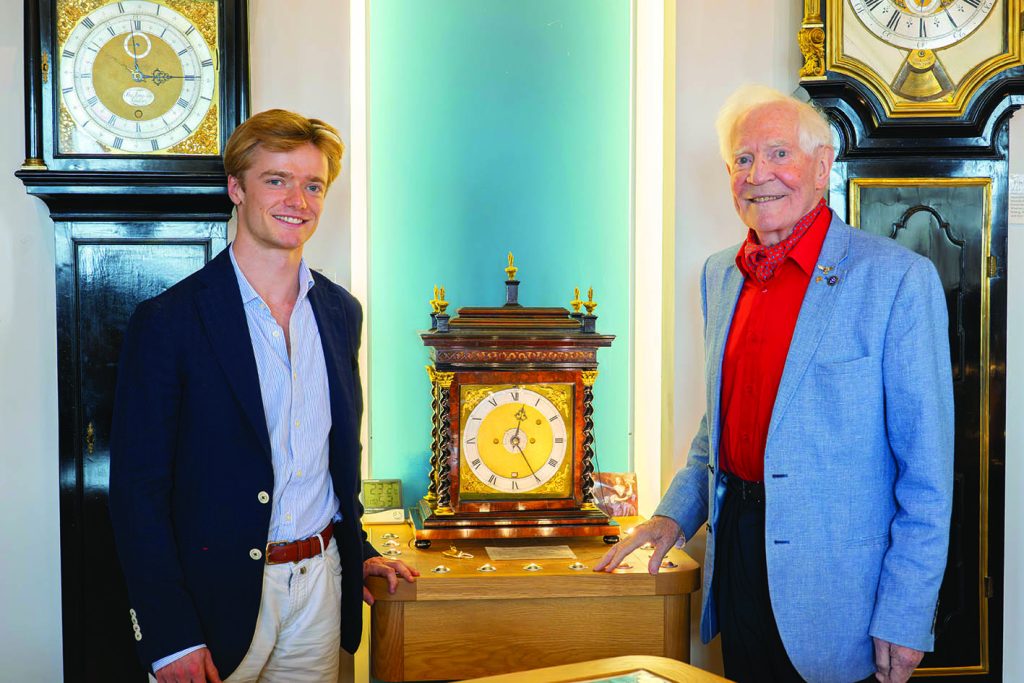
‘The Spanish Tompion is a wonderful example of ‘Badge Engineering’ – the same product presented in different cases! The clock mechanism was perfected in the Selby Lowndes, followed by the Medici Tompion No 278, before being dressed further by Daniel Marot, with four clocks in similar turtleshell cases, with this one being the first,’ he added.
‘All of the days of the week and the strike regulation dial are engraved in Spanish and by deduction this clock was probably made for Carlos III, pretender to the Spanish throne. Ronnie Lee heard of the existence of the clock in the 1950s and spent a holiday trying to track it down. Seth Atwood then talked to Ronnie about his holiday and mounted his own search which finally led to his purchase of the clock. It had pride of place in his collection in the Rockford Time Museum.’
Lewis Walduck, BWCMG director and clock specialist at Bonhams said: ‘It was a privilege to be at the John C TaylorCollection surrounded by some of the finest clocks in the world.
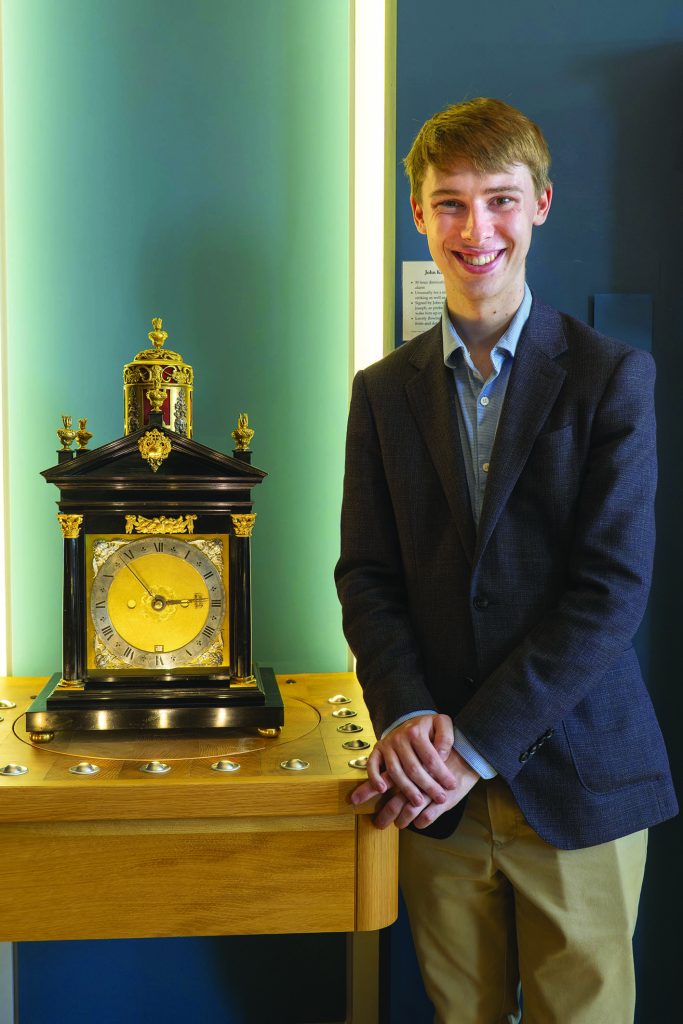
‘One of the highlights was the exceptional Samuel Knibb Cupola table clock. Many people have heard of John and Joseph Knibb however Samuel Knibb is lesser known because he made far fewer clocks. In fact, there are only five known.
‘Nobody has been able to find out where Samuel was apprenticed but he was admitted to the Clockmakers’ Company in 1663’, added Lewis.
‘The clock is Roman striking which is a quintessential Knibb feature and it was made around 1666. If you turn the movement round and open up the back you will see it’s beautifully engraved, ‘Samuel Knibb Londini Fecit’.
‘It certainly made my day and it’s such a pleasure to see such an outstanding and important clock’, added Lewis.
John summarised: ‘I bought my first clock in 1977, made by a John Taylor of Ormskirk and the collection has grown over the years. My collection has been a great source of pleasure, not least when sharing it with other enthusiasts. It is heartwarming to know that so many others share my passion.
‘Over the last 10 years, I’ve worked with an expert videographer, Glenn Whorrall, and we’ve produced films where I discuss the results of my research about the pieces I’ve owned,’ he added.
‘These have come together in the Clocktime Digital Museum, launched in 2024 as an educational platform to showcase key exhibits from my collection. It currently displays 27 different clocks and watches, all featuring detailed explanatory videos and new pieces will be added over time.’
The Clocktime Digital Museum – with its magnificent photographs and explanatory videos – appeals to a broad audience, from enthusiasts through to those studying clock and watchmaking.
Visitors can research an extensive glossary, gain insight about historical clock and watch makers and understand key points in the development of timekeeping – clocktime.co.uk
In addition to the website, a six-weekly newsletter is published highlighting key educational activities, events and observations. Clocktime is also active on social media, in particular on Instagram @ClocktimeSocial and LinkedIn @ClocktimeDigital.