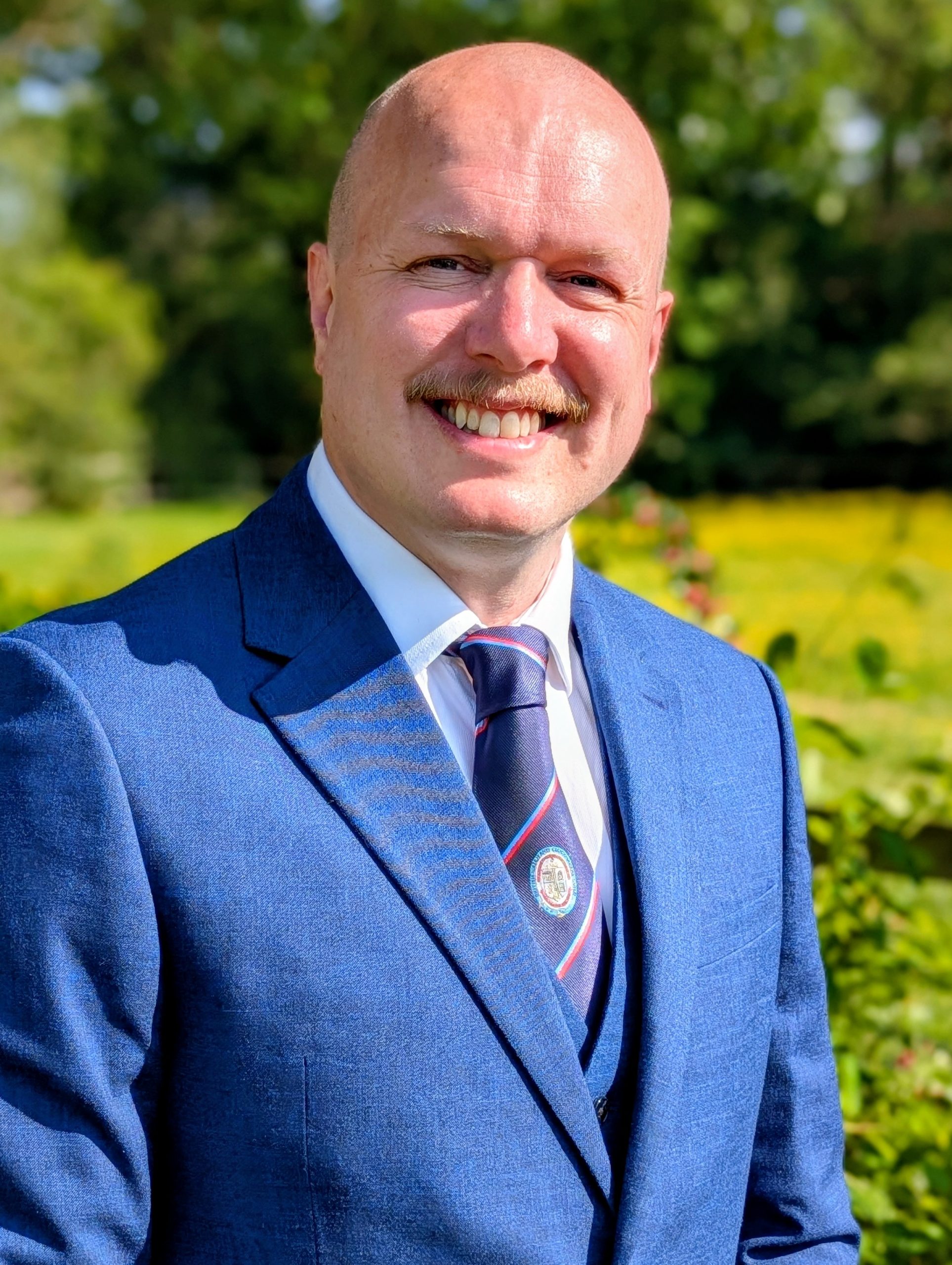
It is with a profound sense of honour and responsibility that I address you as the newly elected Chairman of the British Watch and Clock Makers’ Guild. I would like to begin by extending my warmest thanks to our outgoing Chairman, Chris, for his dedicated service over the past year. His commitment and countless hours of voluntary work have left the Guild in a solid position.
As I take up the role, I am energised by the opportunities that lie ahead. The Guild has a long and distinguished history, and I am determined that we build upon that heritage to secure an even brighter future for British horology.
As we approach the 120th anniversary of our Guild’s founding in 2027, it is a fitting moment to reflect not only on our achievements but also on the remarkable transformations our industry has witnessed. When the Guild was established in 1907, the British clock and watchmaking sector was a significant employer. According to contemporary census data, some 6,000 to 7,000 people were engaged in the trade across the country. Today, while the sector is much smaller, the latest industry reports indicate it supports around 1,500–1,600 jobs – a resilient core of skilled craftspeople, designers, and makers who continue to uphold Britain’s horological heritage amid global competition and technological upheaval.
This contraction mirrors broader patterns across British industry. Consider coal mining, which in the early 20th century employed well over a million people at its peak. Today, direct employment in UK coal mining has dwindled to less than two hundred. No one in 1907, standing at the height of industrial confidence, could have foreseen that one of the nation’s foundational energy industries would contract so dramatically by the 21st century – nor that a craft-based sector like ours would persist, albeit transformed, through quartz revolutions, globalisation, and digital disruption – particularly as by 1907, the industry was already rapidly contracting due to overseas competition.
These comparisons remind us that the future of any industry is inherently unpredictable. Economic shifts, technological breakthroughs, changing consumer tastes, and societal priorities can reshape entire sectors in ways that earlier generations could scarcely imagine. Yet it is precisely this unpredictability that calls for adaptability, innovation, and a strong sense of community – qualities the Guild has fostered for 120 years.
British horology is not a story of decline, but one of endurance and a quiet revival. British watch and clock making is experiencing renewed interest, with growing numbers of independent makers, a resurgence in mechanical craftsmanship, and increasing recognition of UK horology on the world stage. There are solid reasons to feel optimism as we look to the future and what the next 120 years will bring.
With just under 500 members at present, we already represent a significant portion of today’s skilled workforce, yet we still have considerable room for growth. One of my key priorities will be fostering closer collaboration with the Alliance of British Watch and Clockmakers. Many of the brands and independent makers associated with the Alliance are not yet members of the Guild and so we can extend our reach while maintaining the high standards that have always defined Guild’s professional membership. Growth should strengthen our collective voice, enhance our influence, and ensure that British horology continues to thrive both at home and on the international stage.
A central aim of the Guild has always been to connect members with one another. Horology can sometimes feel like a solitary craft, yet the greatest satisfaction often comes from sharing knowledge, experiences, ideas, and friendships with fellow practitioners. Events remain one of the most effective ways to achieve this. We all remember the tremendous success of our two recent gatherings at Downing Street – memorable evenings that showcased the very best of British watch and clockmaking and generated a genuine sense of pride and camaraderie. I am keen to build on that momentum with both grand and more localised gatherings at inspiring venues across the country.
Of course, ambitious plans must be matched with sound financial management. Like many specialist membership organisations run entirely by volunteers, the Guild faces some financial pressures. All of our directors generously give their own time – and often their own money – to keep the organisation running smoothly.
The Guild should always represent excellent value for money and our goal is to make membership feel like an essential requirement for anyone serious about clock and watchmaking in the United Kingdom – something that brings genuine professional and personal benefit, as well as a real sense of privilege.
The most sustainable way to secure our financial future is therefore through steady membership growth. In addition, we hope to be introducing new benefits for existing and future members, as well as new stationery, which will include a subtle redesign of the Guild’s crest and membership certificate.
The Guild is run by members, for members. If you would like to volunteer to help organise local events, write an article for Timepiece, or contribute in any other way, we would be delighted to hear from you. Every contribution is genuinely appreciated. After all, members of the Guild are like one family – all pushing in the same direction, united by our shared passion for horology.
I am genuinely excited about the year ahead and the possibilities it holds. I encourage you all to get involved and to help shape the Guild’s future. Together, we can ensure that the British Watch and Clock Makers’ Guild remains the respected, vibrant, and essential organisation that British horology deserves.